CV
Publications
Projects
Lectures
Research
Miscellaneous
Links
Events
News
Contact
Research area: Thailand
Research Sites in Northern Thailand: Bor Krai, Huai Bong, Mae Sa MaiSoils of NW-Thailand: (a) Major Soils: Acrisols, Alisols, Cambisols; (b) Minor Soils: Anthrosols, Ferralsols, Fluvisols,
Gleysols, Leptsols, Luvisols, Plinthosols, Regosols, Technosols,
Umbrisols; (c) Exotic Soils: Chernozems, Histosols, Stagnosols,
Vertisols
Chernozems - Soils of NW-Thailand
In
NW-Thailand, little patches of Chernozems were found in the
surroundings of karst springs and the area below the water reservoir of
the village Bor Krai. There, during the rainy season, carbonate-rich
water seeps into soil below and transformed it from a Cambisol into
Chernozem in mere 10 years. Three kinds of Chernozems were found so
far, namely Calci-Molliglossic Chernozems, Gloss-Calcic Chernozems, and
Glossi-Luvic Chernozems. Chernozems are either under forest or used for
maize production. According to local farmers, upland rice production is
not feasible on Chernozems.
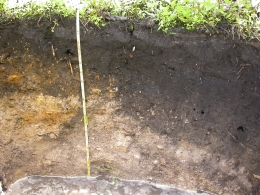
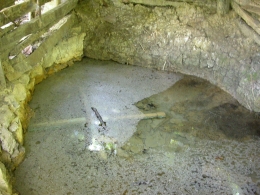
Chernozem on freshwater limestone (left), karst spring with swimming calcite on the water surface providing carbonate-rich water for Chernozem formation (right).
Most Chernozems investigated consist of a very dark thick topsoil (>50cm) with a silty clay texture and a strong crumb structure in the upper part and a subangular blocky structure in the lower part. Further characteristics are secondary carbonates and channels from animals. The boundary to the underlying freshwater limestone is commonly abrupt and irregular.
Chernozem on freshwater limestone (left), karst spring with swimming calcite on the water surface providing carbonate-rich water for Chernozem formation (right).
Most Chernozems investigated consist of a very dark thick topsoil (>50cm) with a silty clay texture and a strong crumb structure in the upper part and a subangular blocky structure in the lower part. Further characteristics are secondary carbonates and channels from animals. The boundary to the underlying freshwater limestone is commonly abrupt and irregular.